Affordable Legal Defense for Entrepreneurs Through AI
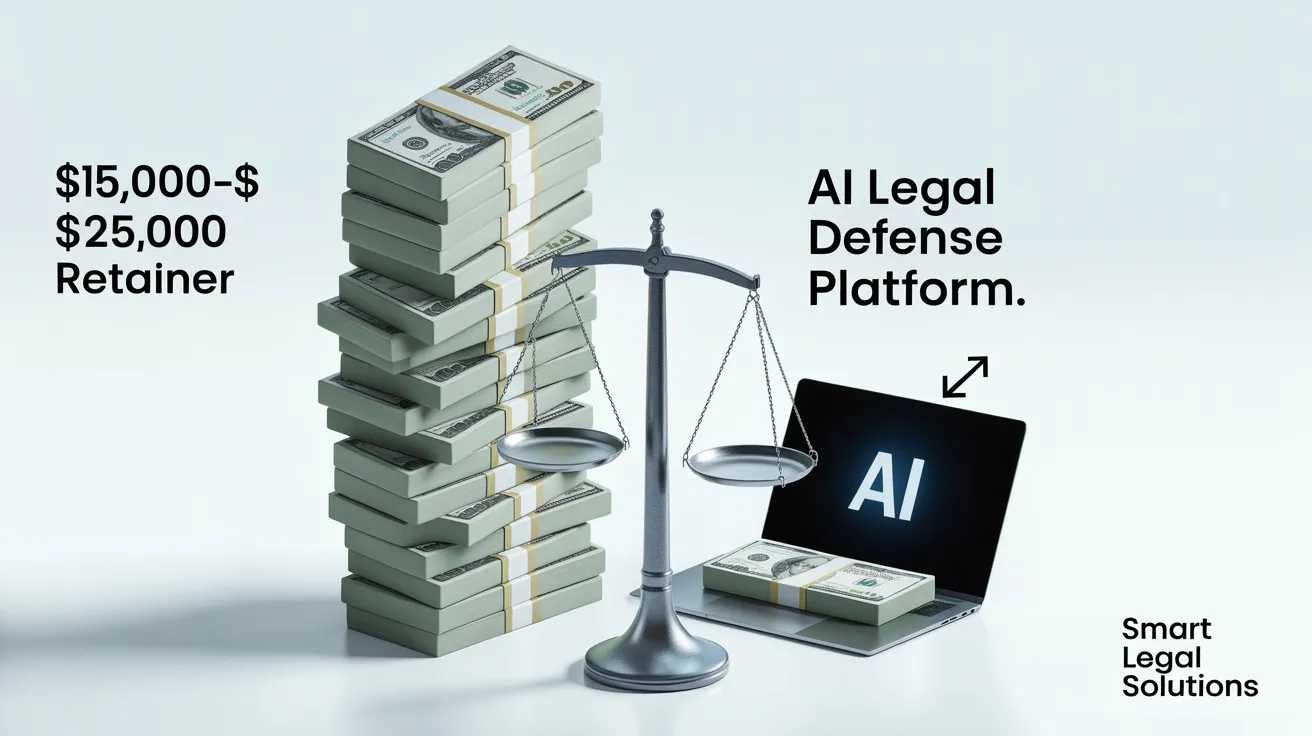
It hits you like a virtual sledgehammer. You receive an email with a heading that stops you cold: "LEGAL NOTICE: Demand for Payment" or "LEGAL: Immediate Cessation Required." Your focus instantly changes from revenue forecasts and business development to an alarming monetary demand. A claim seeking $50,000, $100,000, or higher amounts for a supposed copyright breach or an old, forgotten debt. Your first impulse is to contact an attorney, but this instinct is followed by a fresh surge of worry when you discover the retainer fee: $10,000, $15,000, or up to $25,000 for initial representation. Countless small business operators confront this difficult dilemma-a choice between a settlement that could destroy your business and a budget-breaking legal conflict.
But imagine there's a different approach? What if you could fight back intelligently, strategically, and affordably? For a growing number of entrepreneurs, that third option is becoming a reality through AI legal defense. This doesn't mean eliminating attorneys completely, but about changing the rules of the game. It's about utilizing innovative solutions to evaluate challenges, create defenses, and comprehend your legal standing before investing in expensive legal services. This demonstrates how business owners are regaining control on legal bullies, cutting down on substantial legal costs, and finding the confidence to defend their businesses in today's litigation-prone business landscape.
Vital Takeaways
- Power Dynamics are Changing: Artificial intelligence is enabling company leaders to manage common legal issues on their own, reducing reliance on high-priced lawyers for initial defense stages.
- Education is Your Best Defense: The majority of legal challenges small businesses face are intimidation tactics based on flimsy legal grounds. Knowledge of basic copyright law and debt validation procedures serves as your strongest defense.
- AI as a Research Assistant: AI technology can review legal paperwork, spot potential claim vulnerabilities, and research relevant case law in much faster than traditional methods, reducing your legal costs substantially.
- Pricing is a Critical Element: Traditional legal retainers beginning at $10,000-$25,000, AI-powered educational platforms provide a cost-effective first line of defense at a significantly lower price point.
- Recognizing When to Consult Professional Help: AI technology serves as a useful resource for preliminary work and first steps, but it cannot serve as an alternative to a qualified lawyer in cases involving complex legal situations or ongoing court cases.
Essential Legal Considerations for Small Business Operations
The life of a small business owner involves a continuous juggling act. You find yourself acting as the business leader, marketing chief, human resources head, and frequently the maintenance crew. The last thing you can afford is legal trouble in your business journey. Regrettably, today's business landscape is filled with legal risks. Recent data from 2023 indicates that U.S. small businesses face costs of an annual $160 billion in lawsuit-related expenses. These aren't just major lawsuits making headlines; these are the common legal threats that slowly deplete company resources.
The Emergence of the Legal Intimidator
A significant number of legal threats aren't about seeking justice; they are fundamentally a numbers game. Predatory firms, copyright trolls, and aggressive collectors dispatch thousands of demand letters, well aware that a portion of recipients will be too scared or too uninformed to stand up for their rights. They count on the fact that the cost of hiring a lawyer are often higher than the settlement they are demanding. This creates a problematic motivation to pay, regardless of whether the case is valid. These entities function as legal bullies, employing intimidation as their primary tactic.
Critical Threats to Entrepreneurial Success
While legal complications can arise from any direction, certain recurring challenges regularly impact small companies:
- Copyright Infringement Claims: Such claims are commonly related to images utilized across business websites and blog posts. The majority of these claims are automated and issued without any human review of the context or fair use principles.
- Debt Collection Notices: These notices may be for old, challenged, or questionable debts. Debt collectors usually buy debts at a fraction of their value and then use aggressive tactics to demand complete payment.
- Cease and Desist Letters: These legal documents typically handle a wide range of concerns, including intellectual property conflicts and contractual breaches. They are often utilized to deter competition or silence opposition.
- Banking and Payment Disputes: Conflicts with payment processors or banks can suspend financial access and operations, leaving entrepreneurs to defend their interests.
For entrepreneurs facing these challenges, it often seems like a major crisis. What's important to understand is that many of these situations are primarily matters of education and preparedness, not litigation problems.
Understanding Legal Defense Costs: Traditional Methods Falling Short for Small Businesses
The conventional method for dealing with a legal challenge is clear-cut: you retain an attorney. For major businesses with in-house legal teams and deep pockets, this is a regular expenditure of running a company. For a small business, it's a financial earthquake. The average legal spend for a small company is approximately $13,300 annually, but this number can increase dramatically when litigation is involved, with costs ranging from $3,000 to over $150,000.
The Truth About Retainers
The primary upfront challenge is the attorney retainer. A retainer is basically an initial deposit on a lawyer's services, and in legal disputes, it's rarely below five figures. This results in what is often called the "retainer trap." An entrepreneur could get a claim for $8,000. Legal counsel requires a $15,000 retainer to fight it. From a financial perspective, the practical decision seems to be settling for the $8,000 payment, even if the allegations are unfounded. This is the strategy that predatory litigants depend on. They've deliberately priced their demands to be right beneath the cost of entry for legal representation.
Incentive Misalignment
Moreover, the standard legal model is structured on billable hours. The more time spent on a case, the higher the lawyer's fees. Though conscientious lawyers work efficiently, the system itself tends to reward prolonged cases and complicated proceedings. This poses a clear contradiction with what matters to business proprietors, who seek quick and economical solutions. The key priority for the business owner is to address the situation, not to become involved in a lengthy and costly legal procedure.
The Impact of AI on Legal Advocacy for Entrepreneurs
For decades, the high cost of legal services created an enormous disparity in the market. There was no viable option for company leaders who weren't able to pay for legal counsel but didn't want to surrender to baseless claims. AI technology is currently bridging that gap. It's not a perfect answer, but it functions as an effective instrument that balances the scales by substantially lowering the cost and time associated with the initial, most critical stages of defending against legal claims.
AI: Your Digital Legal Assistant
Consider AI similar to a paralegal possessing the ability and perfect recall to process thousands of pages every minute. Let's explore its applications:
- Document Analysis: Intelligent algorithms can thoroughly review formal legal correspondence and instantly identify essential elements, particularly formal charges, relevant legal codes, and monetary claims. The technology analyzes the legal text with numerous comparable precedents to highlight patterns and potential weaknesses.
- Legal Research: Instead of a lawyer spending considerable time (at $300+ per hour) researching case law, AI technology can search legal databases and deliver applicable case law within moments. The AI can identify information on fair use, debt validation requirements, or specific consumer protection laws that apply to a case.
- Drafting Assistance: AI is capable of creating preliminary reply documents. After inputting the context of the claim and the relevant legal principles, it can generate a professional, organized document that asserts your rights and puts the opposing party on notice that you are prepared to contest their claims.
This is the turning point. The first evaluation and examination, which traditionally costs thousands in legal fees, can be handled with a much smaller investment in an AI-enhanced educational tool.
The AI Legal Defense Framework: A Step-by-Step Approach
Using AI for legal defense is not just mindlessly following a chatbot. It's about following a systematic approach to assess the threat, comprehend your position, and reply from a place of strength. This framework usually consists of three essential phases.
Phase 1: Triage and Evaluation
The initial phase is to employ AI technology to understand what you're dealing with. You can input the legal threat or demand letter into an AI system and ask it to perform an initial evaluation. The goal is to answer several important points:
- What is the main allegation
- Which specific laws or legal regulations are being discussed?
- Is the claiming party the verified rights holder?
- What evidence did they submit?
- Can you spot any obvious inconsistencies in what they're claiming?
This preliminary evaluation allows you to move from a state of panic to a state of informed awareness. It delivers a straightforward, neutral assessment of the circumstances.
Step 2: Analysis and Strategy Development
After understanding the claim, the next step is to utilize AI to investigate your defensive possibilities. For a copyright claim, you could instruct the AI to analyze the four factors of fair use and how they apply to your unique situation. For a debt collection notice, you should direct it to detail the validation requirements under the Fair Debt Collection Practices Act (FDCPA). This stage is centered on building your case. You are accumulating the legal principles and facts that will create the basis of your response. This is also where you can initiate to identify the flaws in your adversary's position.
Stage 3: Communication and Response
With your research finished, you can employ AI to help compose your reply. This isn't meant for using machine-generated text. Instead, it's about employing AI to assist your writing. You supply the key arguments and factual background, and AI assists in crafting this information into a professional and coherent letter. Your reply should generally:
- Confirm the receipt of what they sent.
- Articulate your position clearly and concisely.
- Include the applicable legal concepts that support your position.
- Ask for further documentation and validation, when needed.
- Present information objectively without emotional bias.
This structured response demonstrates to the other side that you are well-prepared, knowledgeable, and organized to defend your position. It instantly transforms the dynamic from one of intimidation to one of a thorough legal discussion.
Managing Copyright Claims Through AI Analysis and Response
Intellectual property disputes stand as one of the most common threats for internet-based companies. A company might use a picture in their content, only to receive a substantial monetary claim from a stock photo company in the future. AI technology shows remarkable efficiency when handling these matters.
Reviewing the Claim
An automated system can aid in evaluating the legal demand. It can analyze the demand letter to determine if it includes copyright ownership documentation, an official registration number, and a clear explanation of the supposed copyright breach. Many demand letters from copyright trolls are purposely unclear and don't include this vital documentation. As business leader Tony copyright of LinkDaddy found out, artificial intelligence can be utilized to evaluate the legitimacy of a demand, leading to an effective defense against a $500,000 copyright lawsuit without engaging a lawyer.
Researching Fair Use Guidelines
AI can be a valuable instrument for researching the doctrine of fair use. Fair use stands as a legal principle that enables the limited use of copyrighted material without permission from the intellectual property owner. Artificial intelligence can assist you comprehend the four factors of fair use and how they can relate to your case, offering you with the arguments required to build a solid defense.
Strategic Debt Collection Defense: AI-Driven Validation
Yet another domain where AI is creating meaningful change centers on safeguarding against pushy collection agencies. The FDCPA provides business owners and consumers particular legal rights, like the ability to demand validation of a debt.
The Significance and Value of Validation Documentation
A debt collection company needs to give you with documentation about the debt, known as validation documentation. When you write a debt validation letter, you are legally demanding that the collector demonstrate that you owe the debt and that they have the legitimate claim to collect it. Numerous collection agencies, specifically those who acquire read more old debt, cannot provide this information. An AI can assist you in preparing a thorough debt validation letter that demands all the required information, such as:
- The original creditor's name
- The original account number
- An authentic copy of the signed contract with signatures.
- A thorough record of the supposed balance due.
Submitting a formal validation letter usually prevents a debt collector in their tracks. When they fail to validate the debt, they are not legally permitted to proceed with collection efforts.
Navigating AI Legal Defense: Understanding Its Strengths and Weaknesses
It is crucial to recognize the restrictions of AI in the legal field. AI serves as a learning and preparation resource, not a certified legal practitioner. Understanding the distinction between what you can address personally and when you need professional help is crucial for a successful defense strategy.
Ideal Scenarios for AI Defense Support
- First-Stage Threat Review: Analyzing demand letters and cease and desist notices.
- Responding to Baseless Claims: Crafting professional replies to copyright trolls and debt collectors who rely on intimidation tactics.
- Legal Research: Analyzing your rights and the legal frameworks that apply to your circumstances.
- Organizing Your Case: Organizing your documents and key points prior to meeting with a lawyer, which could save thousands in billable hours.
Critical Times to Seek Legal Representation
There are particular circumstances when you shouldn't attempt handling your own legal defense. Upon being served with a formal lawsuit, you should seek legal representation. Other situations calling for a lawyer's immediate attention are as follows:
- Criminal charges.
- Official regulatory investigations by government authorities.
- Complex legal matters concerning different parties across multiple jurisdictions.
- High-stakes scenarios where the possible losses could destroy your enterprise.
Under these circumstances, the purpose of AI shifts from a core defense tool to a supplementary resource. You can leverage it to stay better informed and prepared as a client, but you must have a human expert in your corner.
Creating Your AI Law Protection Framework
Getting started with AI legal defense isn't dependent on a degree in computer science. It essentially needs a willingness to learn and connection to the appropriate tools. The heart of your toolkit will be a capable language model like ChatGPT or Claude, paired with an educational platform that offers specialized prompts and frameworks for typical legal threats.
The Vital Importance of Quality Prompts
The performance of any AI solution depends on the quality of the prompts you provide. A general prompt like "write a response to this demand letter" will produce a basic and potentially inadequate response. Conversely, a targeted prompt will instruct the AI to carry out an in-depth evaluation and generate a reply based on specific legal principles. This is the reason platforms that provide field-tested prompts and frameworks are so beneficial.
Small Business Victory Stories: Fighting Back and Winning
The remarkable story of Tony copyright, who successfully saved his business more than $511,000 by leveraging AI to combat three major legal threats, serves as a compelling demonstration of what is possible. But he isn't standing alone. All across the country, small business owners are realizing that they have more power than they imagined. They are implementing AI to challenge baseless copyright claims and force debt collectors to authenticate their debts. These achievements are not just about financial savings; they are about regaining a sense of control and choosing not to be victims of a system that has traditionally been biased against them.
Legal Defense: The Path Forward for Small Business Owners
The incorporation of AI within the legal field is just beginning to emerge, but the trend is clear. Legal services are becoming more accessible and affordable. The established authorities of the legal profession are being challenged by digital tools that assist small businesses and individuals. This isn't to say that lawyers will disappear. It means that their role will evolve. They will be able to concentrate on the high-level, complex work that truly requires their expertise, while AI manages the more routine and preparatory tasks.
Business owners on a smaller scale, this marks a welcome change. This indicates that in the future, a legal challenge might not be a source of monetary distress, but rather an issue to be addressed methodically and strategically.
Making Your First Move: Getting Started with AI Defense Solutions
For small business owners, it's crucial to understand AI legal defense at this moment, prior to any issues arising. Learn about the tools and platforms that are available. Master the fundamentals of copyright law and debt collection. Through these preventive measures, you can build a shield around your business. You can transform yourself from a potential target into a knowledgeable guardian of your hard-earned success.
FAQs (FAQ)
Can AI actually help with legal defense, or is it simply exaggerated claims?
Artificial intelligence serves as a valuable resource for legal defense, but it's important to understand its role. It cannot substitute for legal counsel. Instead, think of it as an exceptionally capable support tool for research and preparation. It enables you to analyze documents, grasp complicated legal matters, and prepare preliminary responses, all of which results in saving substantial resources. The essential approach is to utilize it for the initial stages of a defense and to recognize when to involve an experienced attorney.
Should I opt for AI tools or professional legal services?
Consider using AI tools for the first analysis of potential legal issues, for responding to potentially meritless claims (including those made by copyright trolls), and to structure your case materials. It's essential to engage a lawyer right away if you receive with a lawsuit, are facing criminal charges, or are dealing with a complex legal matter that could significantly impact your business. A reliable guideline is: use AI for preparation, but rely on a lawyer when litigating.
How much money can I save by using AI in my legal defense?
You can achieve significant cost savings. The initial legal review and demand letter response can cost thousands in lawyer fees. By leveraging AI technology, you can complete this work at a substantially reduced cost. Early resolution through AI intervention can result in tens of thousands in savings. If you ultimately need a lawyer, AI-assisted preparation can minimize their billable time.
What are the boundaries of AI in legal situations?
AI systems face several significant constraints. It cannot act as legal counsel due to lack of legal standing. It lacks the refined decision-making abilities of an experienced attorney and could miss subtle details in particular legal matters. Moreover, it operates using its training dataset, which may not be current. Most importantly, AI can only offer information and assistance, not legal advice.
What's the legality of leveraging AI to conduct analyzing legal documents?
Using artificial intelligence for document analysis and understanding is perfectly legal. You're simply employing a technological tool for research and preparation, much like using common digital tools like search engines and word processors. The important legal distinction is that you cannot claim to be a legal professional without proper credentials, and the AI cannot act as your legal counsel.
6. How do I determine if a legal threat is genuine or just harassment?
This is where AI analysis becomes extremely valuable. A legitimate legal threat will typically be specific, provide evidence of the claim (like a copyright registration number), and originate from a legitimate law firm. An intimidation tactic, in contrast, is often vague, lacks evidence, and may contain aggressive or unprofessional language meant to pressure you into immediate payment. AI can help you identify these warning signs.
How does the Fair Debt Collection Practices Act (FDCPA) safeguard my rights?
The Fair Debt Collection Practices Act is a federal statute which restricts the behavior of third-party debt collectors. You are safeguarded against abusive, unfair, or deceptive practices. One of its most powerful provisions is the ability to verify the debt. When debt collectors fail to demonstrate the debt's validity and that they have the right to collect it, all collection attempts must halt. This provides essential protection for small business owners who might face invalid or aged debts.